
Content Writing
Content writing services in Kenya
AI content strategy
How to Create a Content Marketing Calendar to Help Plan Your Social Media and Blog Posts Effectively

Faith Sayo
According to research by the Content Marketing Institute, companies that publish content consistently generate significantly more traffic and leads than those that post irregularly. In fact, 64% of the most successful content marketers have a documented content strategy, showing that planning dramatically increases content performance. Effective marketing is not driven by random inspiration, but by deliberate planning - deciding in advance what to publish, on which platform, and at what time.
This article explains how to create a practical content marketing calendar that helps you plan your social media and blog content effectively. You’ll learn how to structure your calendar, align it with business goals, choose the right posting frequency, and build a system that keeps your marketing consistent and measurable.
What Is a Content Calendar?
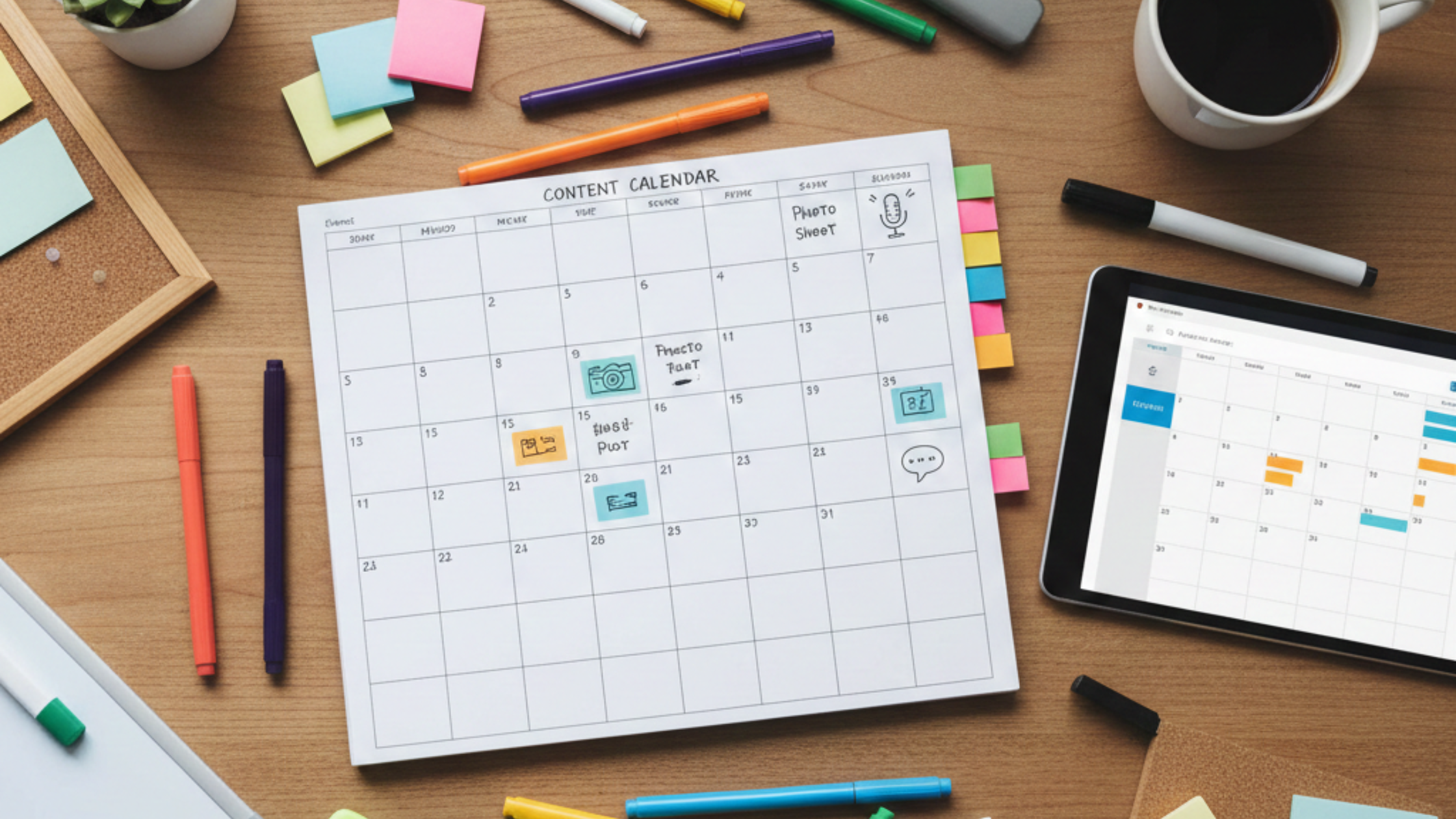
A content calendar is a structured planning document that outlines what content you will create, where it will be published, and when it will go live. It serves as an operational roadmap for your social media posts, blog articles, email campaigns, and other marketing activities.
At a basic level, a content calendar answers three core questions:
- What are we publishing?
- On which platform?
- On what date?
However, a well-developed content calendar goes beyond dates and topics. It can also include content goals, target audience, call-to-action, ownership (who is responsible for creating or approving the content), and performance metrics to measure results.
A content calendar does not have to be complex. It can be created in a simple Word document, a Google Sheet, Excel, or even a printed monthly planner. For larger teams, it may live inside a project management system such as Trello, Asana, Notion, or a dedicated marketing automation platform. The format is less important than the structure - what matters is having a centralized system that clearly maps out your content plan.
What to Include in a Content Calendar
A content calendar should provide clarity, accountability, and direction. While the level of detail may vary depending on the size of your team, there are essential components every effective content calendar should include.
Publication Date
Every piece of content must have a clear publishing date. This ensures consistency and helps you maintain a predictable posting rhythm across social media and your blog.
Without defined dates, content remains an idea rather than an action.
Platform
Specify where the content will be published:
- Instagram
- LinkedIn
- Facebook
- Blog
- Email newsletter
- X (Twitter), TikTok, etc.
Each platform serves a different purpose and audience. Clearly labeling the platform prevents confusion and duplication.
Content Title or Topic
This is the working headline of your post or article. For blogs, it may be the final title. For social media, it can be a short description of the post idea.
Clarity at this stage keeps content focused and aligned with your strategy.
Content Type
Indicate whether the content is:
- Educational
- Promotional
- Engagement-based
- Informational
- Case study or testimonial
Categorizing content ensures you maintain balance and avoid over-promotion.
Objective or Goal
Every piece of content should serve a purpose. Common objectives include:
- Driving website traffic
- Generating leads
- Increasing engagement
- Building brand awareness
- Promoting a product or service
Including the objective helps you evaluate performance later.
Target Audience
Not all content is for everyone.
Include a column identifying who the content is targeting. For example:
- New business owners
- Marketing managers
- Existing clients
- Decision-makers
- Cold audience vs. warm audience
This ensures your messaging is tailored and relevant.
Funnel Stage
Every piece of content should align with a stage in your marketing funnel:
- Top of Funnel (Awareness): Educational content introducing problems or ideas
- Middle of Funnel (Consideration): Deeper insights, case studies, comparisons
- Bottom of Funnel (Conversion): Promotional offers, testimonials, calls to book or buy
Including the funnel stage prevents overloading your calendar with only awareness content or only promotions. It creates balance and movement toward conversion.
Post Copy (Especially for Social Media)
For social media content, your calendar should ideally include the actual post copy or caption — not just the topic.
Unlike blog posts, which may live in a separate document during drafting, social media posts are often short enough to be written directly inside the calendar. Including the full caption helps you:
- Maintain message clarity
- Review tone and alignment
- Ensure CTAs are consistent
- Avoid last-minute rewriting
For blog posts, you may include either:
- A short outline within the calendar, or
- A link to the full draft (covered below)
The more detailed your calendar, the easier it becomes to execute without confusion.
Call-to-Action (CTA)
Define what action you want your audience to take:
- Read the blog
- Comment below
- Download a guide
- Sign up
- Send a message
A clear CTA makes content actionable rather than passive.
Links (Draft and Published URLs)
A highly functional content calendar includes a dedicated Links column.
This section can contain:
- Links to Google Docs where blog drafts are written
- Links to design files (Canva, Figma, etc.)
- Links to scheduled posts
- URLs of published blog articles
- Live social media post links after publishing
Including links keeps everything centralized. Instead of searching through emails or folders, your entire content workflow, from draft to publication, is accessible from one document.
This turns your calendar into a true content management hub, not just a schedule.
Ownership and Responsibilities
Specify who is responsible for:
- Writing
- Designing
- Reviewing
- Publishing
This is especially important for teams. Accountability reduces delays and confusion.
Status Tracking
Include a column that shows the progress of each piece:
- Idea
- Draft
- In review
- Scheduled
- Published
This keeps your calendar operational, not just conceptual.
Performance Metrics (Optional but Recommended)
After publishing, track results such as:
- Engagement rate
- Click-through rate
- Website traffic
- Leads generated
- Conversions
This transforms your content calendar into a performance tool, not just a scheduling document.
How to Create a Content Calendar Step-by-Step
Now that you know what a content calendar should include, the next step is building one in a way that’s easy to execute and easy to maintain. Here’s a practical step-by-step process you can follow every month.
Step 1: Audit Your Current Content Performance
Start by reviewing your recent social media posts and blog articles. Examine engagement metrics, website traffic, click-through rates, and conversions.
Ask:
- Which topics performed well?
- Which posts generated inquiries or sales?
- Where are you inconsistent?
- Are you over-posting awareness content and neglecting promotions?
This audit clarifies what is missing. A content calendar should help you address these gaps.
Step 2: Decide Where Your Calendar Will Live
Before setting goals or drafting ideas, determine the system you will use to manage your content calendar.
For individuals or small teams, a Google Sheet or Excel document is often sufficient. It is flexible, accessible, and easy to update.
If your process involves multiple collaborators, you may prefer a project management tool such as Trello, Asana, or Notion. Larger organizations may use marketing automation platforms with built-in scheduling and analytics.
The tool you choose should match your team size, workflow complexity, and need for collaboration. What matters most is centralization; your calendar should exist in one accessible location, not across scattered documents and messages.
Step 3: Define Clear Objectives
Once your system is set up, define what you want your content to achieve.
Objectives should be measurable and specific. For example:
- Increase website traffic by 20%
- Generate 10 qualified leads
- Improve blog consistency to two posts per month
- Increase engagement rate on LinkedIn
Your objectives determine the type of content you prioritize.
Step 4: Identify Your Target Audience and Funnel Focus
Not all content serves the same purpose. Some content attracts new audiences. Some nurture existing followers. Some drives conversion.
Before populating your calendar, clarify:
- Who are you targeting this month?
- Which funnel stage requires attention - awareness, consideration, or conversion?
If visibility is low, prioritize awareness content. If engagement is strong but sales are weak, increase bottom-of-funnel content.
This prevents imbalance and improves strategic alignment.
Step 5: Determine Your Publishing Capacity
Next, assess your realistic output.
How many blog posts can you produce with quality? How many social media posts can you maintain consistently?
It is better to commit to two high-quality blog posts and execute them consistently than to plan four and publish one.
Consistency builds authority. Overcommitment damages it.
Step 6: Define Monthly Themes or Content Pillars
Now choose the themes that will guide your content.
These should align with your objectives and audience needs. For example:
- Educational marketing insights
- Case studies and testimonials
- Industry commentary
- Service promotions
Themes ensure cohesion across platforms and prevent randomness.
Step 7: Map Content Into the Calendar
Finally, begin scheduling.
Place blog content first, then build supporting social media posts around each article. Ensure each entry includes:
- Publication date
- Platform
- Target audience
- Funnel stage
- Topic/title
- Post copy (for social media)
- CTA
- Links to drafts or design files
- Ownership
- Status
At this stage, your calendar becomes operational.
Step 8: Track Performance and Refine
After publishing, update your calendar with performance data and published links.
Over time, your calendar evolves from a planning document into a strategic performance record, improving with each cycle.
Free Content Calendar Template (Example You Can Copy)
Below is a simple but strategic content calendar structure you can recreate in Google Sheets, Excel, or your preferred project management tool.
You can copy this directly:
|
Date |
Platform |
Target Audience |
Funnel Stage |
Topic |
Type |
Post Copy / Outline |
CTA |
Links |
Owner |
Status |
Notes |
|
3rd |
Blog |
Small business owners |
Awareness |
How to Create a Marketing Calendar |
Educational |
Outline covering definition, steps, and template |
Read the blog |
Draft link |
Faith |
Drafting |
— |
|
5th |
|
New followers |
Awareness |
Why Consistency Matters in Marketing |
Educational |
Short caption summarizing blog insights + hook |
Save this post |
Canva link |
Faith |
Scheduled |
— |
|
7th |
|
Marketing managers |
Consideration |
5 Mistakes in Content Planning |
Educational |
Professional tone, data-backed points |
Comment below |
— |
Faith |
Idea |
— |
|
9th |
|
Warm audience |
Conversion |
Need Help Planning Your Content? |
Promotional |
Offer monthly calendar service (Ksh 15,000) |
Send us a message |
— |
Faith |
Not started |
— |
Send us an email requesting to see a sample Write2Rank content calendar to understand how we transform content ideas into a structured, execution-ready marketing system.
How to Structure It in Google Sheets
Although you can manage everything in a single sheet, a more organized and scalable approach is to divide your content calendar into multiple tabs within the same document. This allows you to separate planning from execution and tracking, while keeping everything centralized in one place.
Monthly Snapshot (Master View)
The first sheet should act as your master overview of the month. This is where you capture the publication date, platform, topic, funnel stage, and status of each content piece.
The purpose of this sheet is visibility. At a glance, you should be able to see how often you are posting, whether your funnel stages are balanced, and whether any weeks are overloaded or empty. This sheet is less about detail and more about clarity. It serves as your strategic dashboard for the month.
Social Media Content Sheet
The second sheet should focus exclusively on social media content. Because social posts are shorter, you can include the full caption directly inside the sheet. This prevents confusion and eliminates the need to search for separate documents.
In this sheet, you should also include the target audience, funnel stage, CTA, design links, published post links, status, and performance metrics. This becomes your execution and tracking hub for all social platforms.
Blog Content Sheet
Blog content requires deeper planning, so it deserves its own sheet. Here, you can include the blog title, target audience, funnel stage, SEO keyword, outline summary, draft document link, published URL, and performance notes.
Separating blog content ensures that long-form articles are not lost among shorter posts. It also allows you to track traffic and conversion performance more intentionally.
Ideas and Brain Dump Sheet
The final sheet should be dedicated to ideas. Not every idea needs to be scheduled immediately, but every idea should be captured somewhere.
Use this space to record client questions, trending topics, campaign concepts, seasonal opportunities, or spontaneous content ideas. When it is time to plan a new month, you will already have a pool of ideas to draw from instead of starting from zero.
Why Businesses Need a Content Marketing Calendar (Importance)
Content marketing without structure quickly becomes reactive. Posts are created at the last minute, blog topics are chosen randomly, and promotional messages are either rushed or forgotten entirely. Over time, this inconsistency affects visibility, engagement, and revenue.
A content marketing calendar introduces discipline into your marketing process. It transforms content from a daily task into a strategic growth system.
Here is why every business should use one:
- Ensures Consistency
Consistent publishing builds trust, authority, and brand recognition. A calendar prevents long gaps between posts and irregular blogging. - Aligns Content With Business Goals
Instead of posting randomly, each piece of content supports a clear objective such as awareness, lead generation, or sales. - Improves Strategic Balance Across the Funnel
A calendar helps you intentionally plan awareness, consideration, and conversion content - rather than overloading your audience with only educational or promotional posts. - Increases Efficiency and Saves Time
Planning allows you to batch-create content, reducing daily stress and last-minute scrambling. - Improves Collaboration and Accountability
Clear ownership and deadlines ensure everyone involved in content creation understands their responsibilities. - Supports Campaign and Launch Planning
Product launches, promotions, seasonal campaigns, and events can be scheduled strategically instead of announced impulsively. - Makes Performance Tracking Easier
When goals and metrics are built into your calendar, it becomes easier to evaluate what is working and refine your strategy. - Reduces Content Fatigue and Idea Block
With an ideas bank and structured planning process, you are less likely to feel stuck or uninspired.
Common Mistakes to Avoid When Creating and Using a Content Calendar
Many businesses build a calendar once and abandon it, or use it in a way that defeats its purpose. To ensure your system works long-term, avoid these common mistakes.
- Planning Without Clear Objectives
A calendar filled with content but disconnected from business goals becomes busy work. Every post should serve a defined purpose - awareness, engagement, lead generation, or conversion. - Overloading the Calendar
Ambitious plans often collapse under unrealistic expectations. Scheduling daily blog posts or five social posts per day may look impressive, but if it cannot be sustained, consistency suffers. Plan according to capacity. - Ignoring Funnel Balance
Some businesses focus only on educational content and never sell. Others promote constantly without building trust. A strong calendar intentionally balances awareness, consideration, and conversion content. - Failing to Track Performance
If you are not reviewing analytics, your calendar becomes static. Performance data should inform the next month’s plan. Without tracking, improvement is impossible. - Not Updating Status and Links
A calendar is a living document. If drafts, design files, and published links are not updated, the system quickly becomes disorganized. - Treating the Calendar as Rigid
While structure is important, flexibility matters too. Industry news, trending topics, or unexpected opportunities may require adjustments. A good calendar guides you; it does not trap you.
When used properly, a content calendar increases efficiency, clarity, and results. When mismanaged, it becomes another unused document. The difference lies in discipline and regular review.
Frequently Asked Questions (FAQs)
1. How far in advance should I plan my content calendar?
Most businesses benefit from planning one month in advance. Monthly planning provides enough visibility to stay consistent while remaining flexible for timely or trending content. Larger campaigns or product launches may require quarterly planning.
2. How often should I post on social media?
There is no universal number. The ideal frequency depends on your capacity and platform. For most small to mid-sized businesses, posting 2-4 times per week per platform is sustainable and effective. Consistency matters more than volume.
3. Should blog posts be included in the same calendar as social media?
Yes, but they should be structured properly. A master monthly sheet can show everything at a glance, while separate sheets can track blog content and social media execution in more detail. This keeps your system organized without clutter.
4. What is the difference between a content calendar and a content strategy?
A content strategy defines your goals, audience, positioning, and overall direction. A content calendar is the execution tool that schedules and organizes that strategy. In simple terms, the strategy defines what and why; the calendar defines when and where.
5. Do I need special software to create a content calendar?
No, a simple Google Sheet or Excel document is sufficient for most businesses. As your team grows, you may choose to use tools like Notion, Trello, Asana, or marketing automation platforms. The effectiveness of the calendar depends more on how you use it than on the tool itself.
6. How do I know if my content calendar is working?
Review your performance metrics monthly. If you see improvements in engagement, website traffic, inquiries, or conversions, and your posting is consistent, your calendar is functioning effectively. If not, revisit your goals, funnel balance, and audience alignment.
7. What tools can I use to create and manage a content calendar?
Many businesses successfully use Google Sheets or Excel because they are flexible, accessible, and easy to customize.
As your workflow becomes more advanced or collaborative, you may consider tools such as Notion, Trello, Asana, or other project management platforms. These tools are helpful for assigning tasks, tracking progress, and centralizing communication.
About the Author
Faith Sayo is a content strategist and marketing writer with over five years of experience developing structured content systems that drive measurable business growth. She works with businesses across the accounting, marketing, technology, and sustainability sectors, helping them translate complex ideas into clear, strategic content.
Her experience includes planning and executing monthly content strategies across multiple platforms, building integrated blog and social media calendars, and aligning content with defined commercial objectives. She focuses on helping brands move from inconsistent posting to disciplined, performance-driven publishing.
Her work emphasizes strategic funnel alignment, audience clarity, and data-informed refinement - ensuring that content contributes directly to visibility, engagement, and lead generation.
She believes content should function as a growth asset, not just a creative exercise.
Do You Need Help Planning and Managing Your Content?
Many businesses understand the importance of structured content planning, but struggle with time, clarity, or internal capacity. Ideas remain ideas. Drafts remain unfinished. Posting becomes inconsistent again.
At Write2Rank, we help businesses move from reactive posting to structured, performance-driven content marketing. Our monthly content calendar service includes:
- Strategic content planning aligned with your business goals
- Funnel-balanced social media and blog planning
- Full content calendar setup and management
- Post copy development for social media
- Blog topic planning and outline development
- Clear CTAs aligned with conversion goals
We build a structured content system tailored to your business.
Monthly Content Calendar Package in Kenya - Ksh 15,000 per month
This package is designed for businesses that want clarity, consistency, and measurable marketing growth without the internal overwhelm.
If you are ready to turn your content into a structured growth system, contact Write2Rank today:
📞 +254 791300174 or 0736 382 424
📧 hello@write2rank.co.ke
.png?width=2240&height=1260&name=Which%20SEO%20agencies%20in%20Kenya%20actually%20understand%20AI%20search%20(1).png)